SaaS Landing Page Template for Startups, Apps, and Software Products
Avantiy Team·August 30, 2026·9 min read
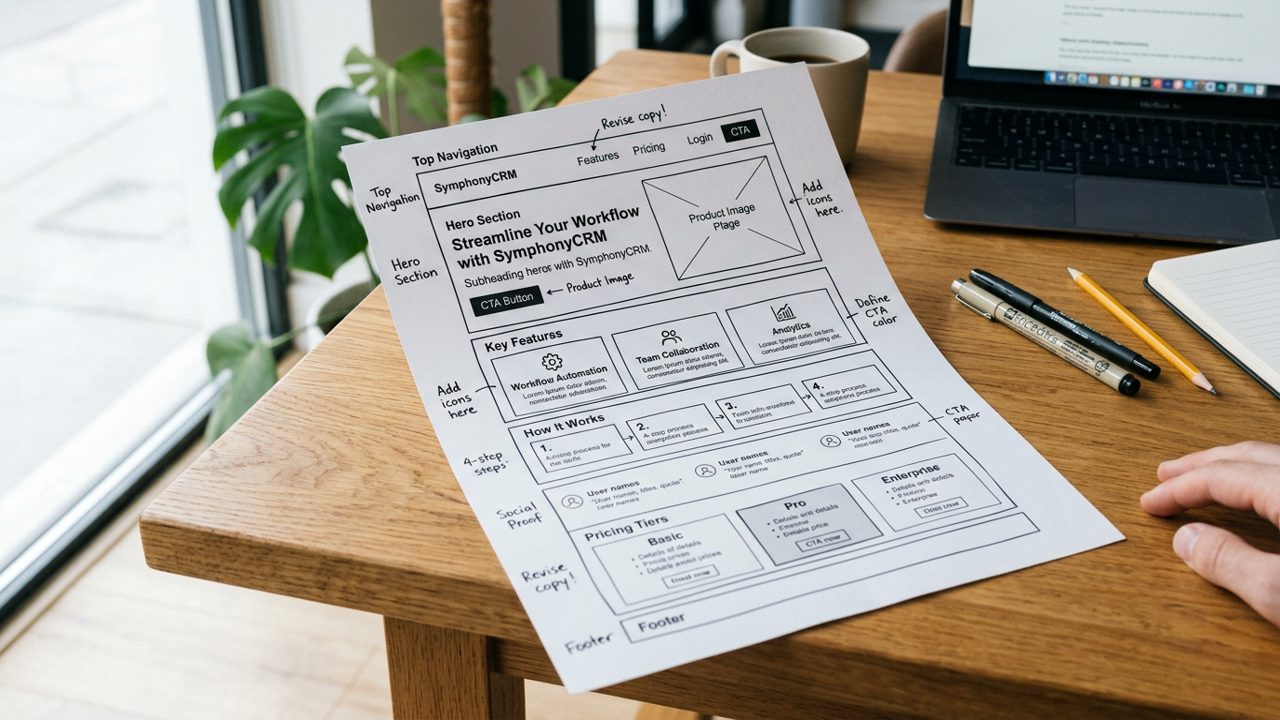
A SaaS landing page template is the fastest way to turn a product idea into a page that can sell. It gives startups, app makers, and software founders a clear structure for explaining value, proving trust, and guiding visitors toward sign-up or demo requests. Instead of starting with a blank screen, you start with a layout that already knows how to convert. That matters when you need to move quickly and still look polished. If you want a flexible starting point, Avantiy’s customizable website templates can help you build a clean page without hiring a designer. You can also study strong visual examples on SaaS website design inspiration and compare layout ideas before you publish. In this guide, you will get a practical SaaS landing page template, section-by-section guidance, and AI prompts you can use to launch faster with less guesswork.
A SaaS landing page template designed for conversions
A SaaS landing page template should do one job well: turn interest into action. It should explain what the software does, who it helps, and why the visitor should trust it now. That is why the best SaaS landing page template is not just attractive. It is structured around clarity, proof, and a single next step.
The strongest templates usually follow the same logic. They lead with a sharp promise, show the product in context, and remove hesitation with social proof and a clear call to action. That structure matters because visitors to SaaS pages often scan first and read later. Therefore, each section has to earn attention quickly.
A good SaaS landing page template should also support non-technical founders. You should be able to edit headlines, swap screenshots, add testimonials, and publish without coding. For teams that need support, Avantiy also offers an AI web design tool for non-designers, which helps you shape the page before launch.
For visual inspiration, you can review SaaS landing page concepts on Dribbble and notice how the best layouts reduce clutter. However, inspiration alone is not enough. The page still needs a conversion path that matches your offer, your audience, and your pricing model.
What is a SaaS landing page template?
A SaaS landing page template is a prebuilt page structure made for software products. It usually includes a hero area, feature sections, social proof, and a call to action. In practice, it helps founders launch faster because the conversion logic is already built in.
This is different from a generic website template. A SaaS landing page template focuses on one goal: getting the visitor to sign up, book a demo, or start a trial. That focus makes the message clearer and the page easier to optimize.
Essential sections for a SaaS landing page template
A SaaS landing page template works best when every section has a clear job. That keeps the page easy to scan and easy to trust. It also helps AI tools and human readers understand the offer fast.
Before you design anything, study how strong SaaS pages are structured. You can watch
">9 AMAZING SaaS Websites You Can Copy by Payton Clark Smith for visual ideas, then compare that with the conversion principles in
">7 CRUCIAL Things Every SaaS Landing Page Should Have by Rob Walling. Together, those references show why a SaaS landing page template needs both design clarity and conversion logic.
A practical template usually includes the following sections:
- A direct hero statement
- Benefit-driven product messaging
- Feature blocks with specific outcomes
- Social proof such as testimonials or logos
- Pricing or one clear call to action
- An FAQ section that removes objections
If you want a ready-made starting point, Avantiy’s customizable website templates make it easier to keep those sections consistent. In addition, if your product needs a broader site later, a builder with hosting can help you publish and keep everything live in one place.
The key is not adding more sections. It is choosing the right ones. Many founders overload the page with too much detail. However, the best SaaS landing page template keeps the visitor moving forward with each block.
Here is how each core section should work.
Hero section
The hero section should explain the product in one clear sentence. It should say what the software does, who it is for, and what action the visitor should take next.
Use a short headline, a supporting subheadline, and one primary button. For example, you might focus on a free trial, demo request, or waitlist signup. Keep the hero simple. That helps visitors understand the offer before they scroll.
Product benefits
The benefits section should show the outcome, not just the feature. Instead of listing tools, explain what users save, improve, or simplify.
For example, say the product helps teams launch faster, manage work in one place, or reduce manual steps. This section is where your SaaS landing page template starts to feel useful, not just polished.
Feature blocks
Feature blocks should support the benefits with proof. Each block should connect one feature to one result.
Keep the language specific. If the product has integrations, automation, dashboards, or dynamic content, show how those features make the user’s day easier. This is also a good place to mention app integrations or dynamic pages if they matter to the offer.
Social proof
Social proof helps reduce doubt. It can include testimonials, partner logos, review snippets, or short quotes from customers.
If you do not have many customers yet, use founder credibility, beta feedback, or early user comments. The goal is to show that real people trust the product. That trust often matters more than visual polish.
Pricing or call-to-action section
This section should make the next step obvious. If you show pricing, keep the tiers easy to compare. If you are not ready for pricing, use a focused call to action that matches your funnel.
A SaaS landing page template should never leave visitors wondering what to do next. One primary action is usually enough.
FAQ section
The FAQ section should answer objections before they stop the sale. Good questions cover setup time, integrations, support, and what happens after signup.
This section can also help SEO because it mirrors real search intent. When written clearly, it reassures readers and gives them one more reason to act.
How to customize your SaaS landing page with AI
You can customize a SaaS landing page template quickly with AI if you give the tool clear instructions. The best results come from specific prompts, not vague requests. That means you should define the audience, the offer, the tone, and the call to action before you generate copy.
Start with your core message. Then adjust the template around your product category. For example, a B2B app may need a demo-focused page, while a startup tool may need a free-trial page. Avantiy’s prompt-based website builder can help you generate a first draft from a simple brief, and how to build a website with AI explains how to move from draft to launch.
Use AI to speed up the repetitive work. Ask it for headline options, benefit bullets, testimonial rewrites, and CTA variants. Then refine the output so it sounds human and specific. A SaaS landing page template should still feel like your brand, not a generic generator result.
If you need a broader product site after launch, a platform with multi-page website support can extend the same design system across pricing, about, and contact pages. Meanwhile, support options matter too. Avantiy offers help by chat, email, phone, and video call, which is useful when you want feedback before publishing.
The best workflow is simple: draft with AI, edit with your product knowledge, and publish once the page feels sharp. That approach saves time and keeps your SaaS landing page template aligned with your real offer.
SaaS landing page copy prompts
Use prompts that tell AI exactly what to write. For example: write a homepage headline for a SaaS landing page template for solo consultants who want to automate client onboarding.
You can also ask for benefit bullets, objection-handling FAQs, or a pricing CTA for a free trial. Specific prompts create better copy because they reduce guesswork and keep the message focused.
Publish and test your SaaS landing page template
Publishing is not the end of the process. It is where your SaaS landing page template starts collecting real feedback. A strong launch gives you a page that looks professional, loads correctly, and directs traffic to one clear action.
Before you go live, check the basics. Make sure the headline reads clearly on mobile. Confirm that buttons work. Review your screenshots, form fields, and page spacing. If your product includes updates or content collections, Avantiy’s AI website generator and publishing tools can help you move from draft to live without extra complexity.
After launch, test one change at a time. Try a different headline, a shorter CTA, or a stronger testimonial. Then watch whether the page feels easier to understand. Even small improvements can make a difference because landing page visitors decide quickly.
If you are still exploring design direction, browse SaaS templates for layout ideas and compare them to your own offer. However, do not copy the page blindly. Your SaaS landing page template should reflect your product, your audience, and your next step.
A clean launch is usually better than a perfect delay. Therefore, focus on clarity first, then improve the page with real user behavior.
Key Takeaways
A SaaS landing page template should prioritize clarity, trust, and one clear action.
The best template includes a strong hero, benefit sections, feature blocks, social proof, and an FAQ.
AI can speed up customization, but the copy should still reflect your product and audience.
Publishing early is better than waiting for perfection, especially for startups testing demand.
Avantiy helps non-designers build and publish a SaaS landing page template faster with templates, AI tools, and support.
Frequently Asked Questions
What should a SaaS landing page template include?
A SaaS landing page template should include a clear hero, benefit-focused copy, feature blocks, social proof, and one strong call to action. It should also include an FAQ section so visitors can solve common objections before they leave. The goal is to make the product easy to understand and easy to trust.
How do I customize a SaaS landing page template without a designer?
You can customize a SaaS landing page template by editing the headline, benefits, screenshots, testimonials, and CTA to match your product. AI tools make this faster because they can generate copy drafts and section ideas from a simple prompt. Then you refine the text so it sounds specific, natural, and on brand.
Is a SaaS landing page template good for a new startup?
Yes, a SaaS landing page template is a smart choice for a new startup because it saves time and reduces design guesswork. It gives you a conversion-ready structure so you can launch, test, and improve faster. That is especially helpful when you need to validate an idea before investing in a full site.
Ready to build a website like this?
Describe your business and Avantiy's AI gives you a working starting point — then you stay in control, with real people here if you need a hand.