
If you want a clear route into small business and ecommerce, start lean: define one offer, pick an AI website builder with built‑in shop and bookings, validate shipping and payments, and launch within days—not months. Then iterate on content, SEO and email with measurable goals and simple automation. Below is your complete, practical playbook.
What Does Small Business and Ecommerce Success Look Like in 2026?
Success in 2026 is less about the flashiest storefront and more about dependable, fast paths to purchase. Customers expect frictionless checkout, easy ways to book or subscribe, and human clarity in your copy. Behind the scenes, you need reliable tools for orders, stock, fulfilment and customer follow‑up, with minimal manual admin. A modern AI builder helps you assemble this stack quickly and keep it coherent.
From day one, aim for four qualities: speed, simplicity, trust and measurability. Speed means pages that load in under a couple of seconds and tasks that take fewer clicks. Simplicity is a clean navigation, plain‑English copy and obvious next steps. Trust is earned through clear pricing, policies and accessible design. Measurability means you can see which channels drive sales and where visitors drop off.
Above all, align your offer to how people actually shop. For many, especially on mobile, the ideal journey is home page to product or service to checkout in three taps. The same applies to memberships or bookings—no hoops. If you can maintain that level of clarity, your small business and ecommerce setup will attract and convert more consistently.

Where Should You Start If You’ve Never Sold Online Before?
Begin with the smallest viable offer. Pick a single product, bundle or service package that you can fulfil reliably this month. Write a 100‑word value statement: who it’s for, the problem it solves, what’s included and how long it takes to deliver. This text becomes your product page foundation and your ad copy test. Keep your first shipping and returns policies deliberately simple.
Next, validate payments and fulfilment. Set up a secure payment gateway, place a £1–£5 test order yourself, and fulfil it as if it were real. If you’re offering services, test a booking flow from calendar selection to confirmation email. This dry run surfaces missing steps and language that confuses customers. Fix those before launch day. Then publish a minimum set of pages: Home, Shop/Services, Product/Service detail, About, Contact, and FAQs.
Finally, set a 30‑day experiment. Choose one primary channel you can manage consistently—local search, social DMs, a small newsletter or one partnership. For a straightforward small business and ecommerce start, post twice weekly, answer every query within a business day, and capture email at checkout or booking. You’re proving two things: real demand and a repeatable process.
Choosing the Right Platform: AI Builder, CMS, or Custom?
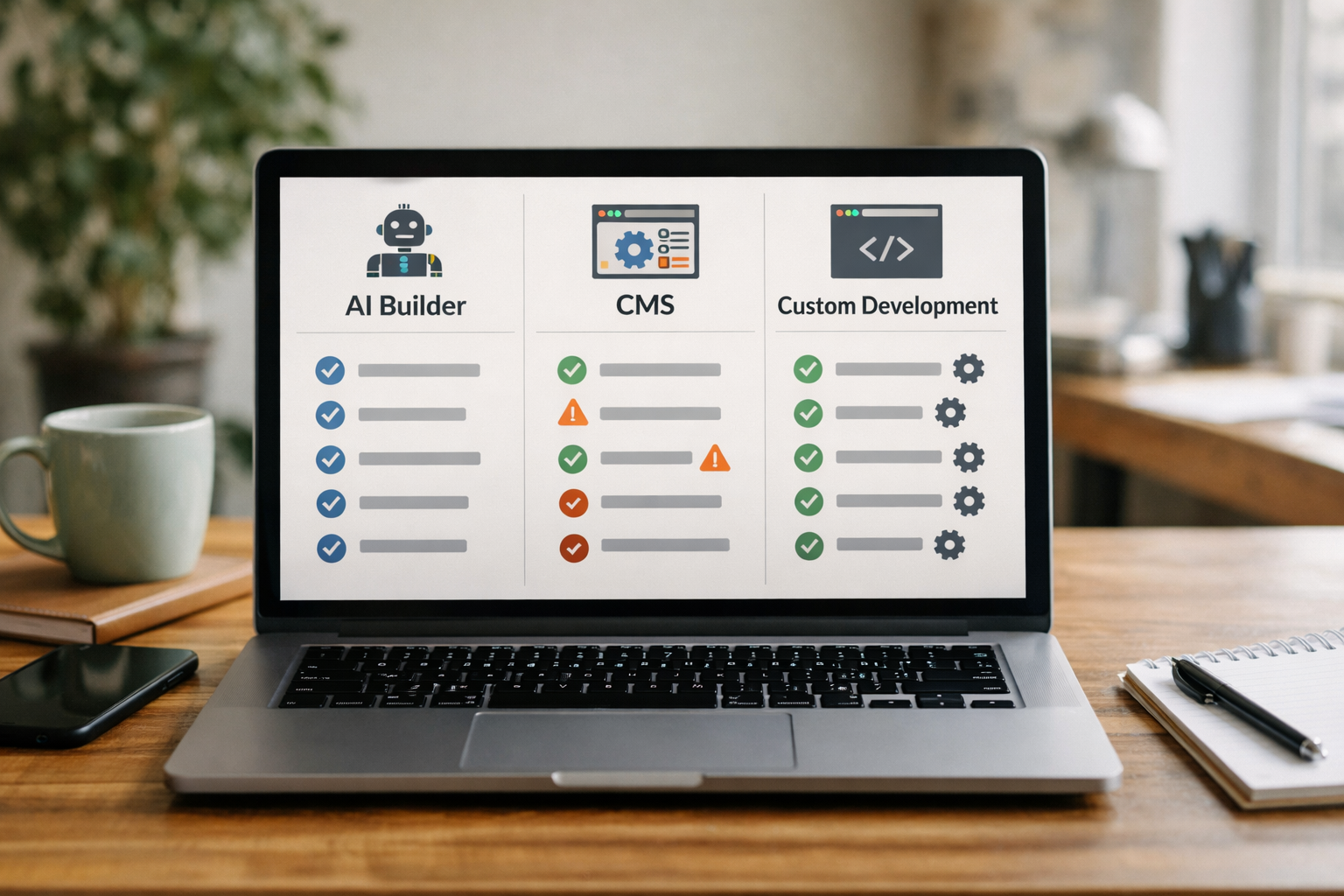
Your platform choice affects cost, speed and the headaches you’ll avoid later. In broad strokes, there are three routes. An AI website builder with integrated ecommerce and bookings is the fastest to value: you describe your business, it drafts pages and structure, and you refine in a visual editor. A traditional CMS (such as a self‑hosted system) can be flexible but often needs plugins, security patching and developer time. Full custom development is powerful for unique needs, but it’s slower to launch and expensive to maintain.
Avantiy is an AI‑driven builder that generates pages, copy and navigation from plain English, then lets you adjust everything in a no‑code editor. It includes online stores, bookings and memberships, plus built‑in AI‑powered SEO and accessibility tools. Infrastructure is ISO 27001 and SOC 2 certified, with UK‑based support. You can create a free account and keep your site free until you publish—meaning you only pay when ready to go live.
Think through ownership and overhead. With an AI builder such as Avantiy, you’re not juggling themes, patching vulnerabilities or reconciling a dozen plugins. If you’re unsure which path suits your team, this comparison of the best website builder for small business in the UK breaks down realistic costs, support and upgrade paths, so you can avoid hidden complexity and pick with confidence.
The Core Ecommerce Stack: Payments, Shipping, Tax and Compliance
Before marketing, make sure your operational plumbing is sound. Payments come first: choose a gateway that supports UK cards, Apple Pay/Google Pay and Strong Customer Authentication (SCA). Enable fraud checks and set up alerts for chargebacks. Run multiple test orders at different price points. Configure payment failure emails and set a clear retry policy for subscriptions or memberships.
Shipping and fulfilment demand clarity. Offer simple options initially—standard and tracked—then expand as order volume grows. Set thresholds for free delivery only when margins allow. Write a plain‑English returns policy and place it near the add‑to‑cart button and in the footer. For distance selling rules, see the government’s guidance on online and distance selling for businesses to ensure cooling‑off periods and information requirements are properly covered.
Tax and data handling must be right from day one. Configure VAT rates correctly for your products and services and ensure invoices display required details. For privacy and cookies, publish a policy that explains which analytics and marketing tools you use, obtain consent where needed, and make opt‑outs easy. The ICO’s UK GDPR guidance is your baseline for lawful processing and data retention. Keep access to admin panels restricted with MFA, and audit user roles quarterly.
How Do You Drive Traffic Without a Full-Time Marketer?
You don’t need every channel—just the right ones for your offer and location. Start with intent‑driven SEO and one relationship channel. For local services, optimise your Google Business Profile, collect a handful of genuine reviews, and add structured data for opening hours and bookings. For products, create a concise set of category pages that answer specific buyer searches and use internal linking to related items and FAQs.
On the content side, ship a few high‑quality pieces that directly support buying decisions: comparison pages, care guides and usage examples. If you need an end‑to‑end walkthrough, this step-by-step landing page walkthrough shows how to go from draft to first sale using clear structure and real customer language. Pair this with a lightweight email programme: a welcome sequence, post‑purchase tips and a re‑order nudge at the right interval.
Partnerships punch above their weight for lean teams. Co‑host a short webinar with a complementary local business, swap guest posts or bundle products. Keep it simple and measurable: one landing page per partnership, one discount code, one follow‑up email. Over time, this becomes a repeatable engine for small business and ecommerce growth—reliable, low‑cost and compounding.
Need a hand mapping your first campaigns? Book a short 1:1 setup session and get practical guidance tailored to your shop or service.

Pricing, Margins and Proven Offer Structures That Work
Good pricing starts with unit economics: cost of goods or delivery, packaging, payment fees, platform fees, shipping and expected returns or no‑shows. Add a realistic time value for service delivery. From there, shape offers that make buying easier: curated bundles, starter kits, and tiered service packages. Each option should have a clear best‑value choice that you want most customers to pick.
Subscriptions and memberships can stabilise cashflow if they’re anchored in recurring value—refills, maintenance checks, or ongoing access to premium content. Build for cancellation ease and honest messaging; customers who trust you to let them leave are more likely to return later. Trial pricing works best when it reflects real use: a discounted first month or a smaller starter pack rather than a coupon that confuses accounting.
When you present pricing, default to clarity: landed costs displayed early (tax where applicable, shipping estimate at basket), transparent terms, and short bullets of what’s included. In many small business and ecommerce contexts, removing a £3 surprise fee lifts conversion more than any design tweak. Treat pricing pages as living documents—review quarterly and align with stock, supplier costs and customer feedback.
Site Architecture That Converts: Pages, Navigation and On-Site Search
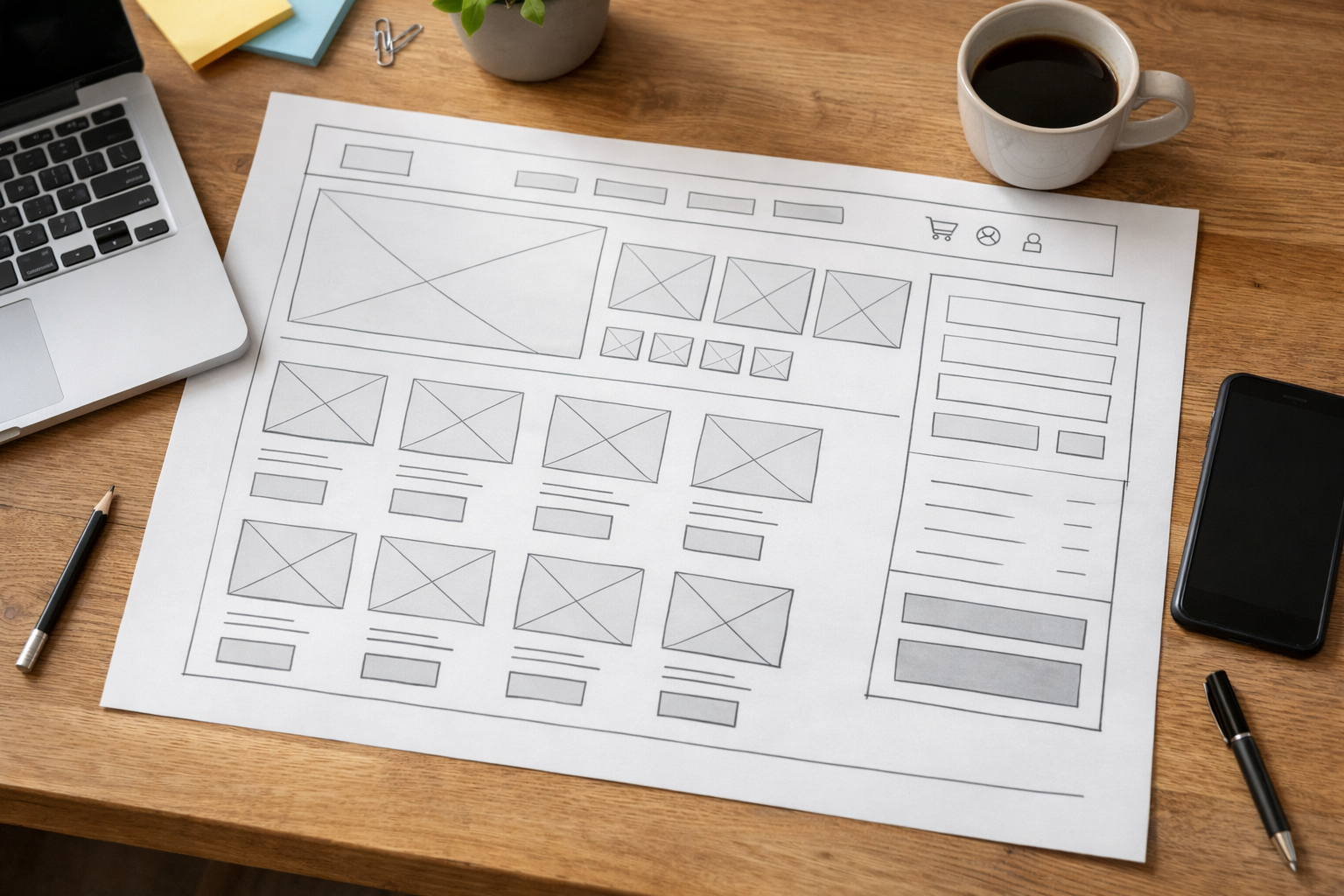
A converting structure guides visitors from interest to action in as few choices as possible. Start with a concise main menu: Shop/Services, About, FAQs and Contact. Add secondary navigation for account, basket and bookings. For products, build a shallow hierarchy: Home → Category → Product. For services, it’s Home → Service Overview → Individual Service → Booking. Avoid orphan pages; every page should link forward to an action.
On‑site search matters more than many realise. Ensure it tolerates typos, supports synonyms and surfaces bestsellers or most‑booked services first. Filtering should be obvious, not overwhelming; if a filter rarely changes the result set, remove it. Place clear calls to action near the top of pages on mobile. For bookings, show real‑time availability and time‑to‑complete so customers can plan without guessing.
Finally, design for scannability. Use short paragraphs, descriptive sub‑headings and benefit‑led bullets near calls to action. Repeat key micro‑copy where uncertainty tends to creep in: delivery timelines, returns, and what happens after you book. Heatmaps and session replays can flag friction points; fix the copy or layout there before adding new pages. This steady refinement is what turns browsers into buyers.
Accessibility, Performance and Data Protection: Non‑negotiables in the UK
Accessibility isn’t optional if you care about reach and reputation. Use real text (not images of text), provide alt text for meaningful images, ensure colour contrast meets WCAG standards and make forms keyboard‑navigable. Headings should form a logical outline; never rely on colour alone to convey meaning. Accessible design improves conversions for everyone, including mobile users and those in a hurry.
Performance influences both SEO and sales. Compress assets, lazy‑load non‑critical content and minimise scripts. Fewer plugins and consolidated features mean fewer conflicts and quicker pages. Monitor Core Web Vitals and treat regressions as high‑priority bugs. On data protection, document what you collect, why you collect it and how long you keep it. Provide clear rights information and a simple route to delete or export personal data.
Security is a leadership concern, not just a technical one. Use multi‑factor authentication, restrict admin access, rotate API keys and maintain regular backups. The NCSC’s Small Business Guide to Cyber Security offers pragmatic steps you can implement this week. In short, trustworthy small business and ecommerce operations are accessible, fast and respectful of customer data—qualities that compound customer loyalty over time.
Comparison Table: Approaches to Building and Running Your Store
Not all build paths are equal. The matrix below compares common approaches across speed, skills, cost and control so you can choose the route that fits your goals, budget and timeline. Use it to sense‑check early assumptions and align your team before you commit.
| Approach | Setup Time | Skills Needed | Upfront Cost | Ongoing Maintenance | Customisation | Ecommerce/Bookings Built In | SEO/Accessibility Tooling | Data Ownership/Control | Best For |
|---|---|---|---|---|---|---|---|---|---|
| AI Website Builder (e.g., Avantiy) | Hours to a few days | No code; basic content editing | Low; free until publish | Low; platform‐managed | High within template system | Yes; native | Yes; guided and automated | High; export and clear policies | Fast, professional launch without devs |
| Traditional CMS (self‐hosted) | Days to weeks | Moderate; plugins, hosting, updates | Low–moderate; themes/plugins | Moderate–high; patching and conflicts | High with developer support | Via plugins | Varies; depends on stack | High; but you manage security | Teams with tech capacity |
| Custom Development | Weeks to months | Advanced; design and engineering | High; bespoke build | High; continuous engineering | Very high | Bespoke integration | Bespoke implementation | Very high; you own everything | Unique, complex requirements |
| Marketplace/Third‐Party Platform | Hours to days | Low | Low | Low; platform‐managed | Low–moderate; constrained | Yes; within platform rules | Basic | Limited; subject to platform | Testing demand; low overhead |
If you need speed, integrated SEO and a clean editing experience, an AI builder like Avantiy is hard to beat. It’s purpose‑built for small business and ecommerce: stores, bookings and memberships in one place, UK‑based support, and security standards that make procurement straightforward for teams. You can evolve the site as your catalogue and operations grow.

What Metrics Matter Most After Launch?
Track what predicts profit, not just what looks impressive. Start with conversion rate (per device), average order value (AOV), and the share of orders from returning customers. For services, watch booking completion rate and no‑show percentage. Map these against channel: organic search, direct, email, referrals and paid. If a channel is growing sessions but not revenue, refine targeting or landing pages before spending more.
Operational metrics tell you where to shore up margin: pick‑and‑pack time, refund rate, and first‑response time on support. For subscriptions or memberships, monitor churn and time‑to‑first‑value—the interval between signup and the first moment a customer experiences real benefit. Treat analytics events as products: name them clearly, test them quarterly and keep a changelog so future you knows what changed and why.
Finally, layer qualitative insights on top. Ask a one‑question post‑purchase survey (“What almost stopped you from buying today?”) and review responses monthly. Watch two or three session recordings a week to spot confusing patterns. This combination—quant plus story—keeps decisions grounded and actionable.
Frequently Asked Questions
Do I need a registered company to start selling online?
No, you can begin as a sole trader in the UK and register later if it suits your plans. Make sure to keep clear records, understand your tax obligations and display required business information on your site. As you grow, consider whether limited company status benefits liability, taxes or procurement with larger clients.
How quickly can I launch a professional site without code?
With an AI website builder and a focused offer, many teams can reach a credible first version in a few days. Draft core pages, add products or services, test payments and bookings, and publish. Launch is not the finish line—plan two weeks post‑launch for small improvements informed by real visitor behaviour.
Can I sell both services and physical products together?
Yes. Use clear categories and separate templates if possible: products with delivery estimates and returns information, services with duration, availability and pre‑appointment notes. Keep checkout logic straightforward and ensure confirmations reflect what was purchased. If you bundle a service with a product, spell out who ships, who attends and in what order.
What about VAT, invoicing and receipts?
Configure VAT rules per product or service during setup and ensure your invoices include required business details. Offer downloadable receipts in customer accounts and attach invoices to order confirmations. If you operate mixed supplies or move into new markets, review your VAT treatment periodically and update templates accordingly.
How do I migrate from my current website without losing SEO?
Start with an inventory of existing URLs, map them to the new structure and create 301 redirects for any changes. Republish high‑performing content first, preserve metadata and internal links, and verify your new site in search consoles. Keep the old site accessible to you for reference until all redirects and analytics look clean post‑launch.
Ready to move from planning to publishing? You can create a free Avantiy account today, generate your pages with AI, and keep building at no cost until you’re ready to go live.